


Use of domicile companies, justification of complex structures, reading organisational charts, tax risks for clients and risks for banks: develop your AML expertise with a structuring specialist.
AML RISK AND STRUCTURES
Why have structures become a central AML risk factor?
- Why is understanding client structures now essential for effective AML compliance?
- Why do authorities increasingly sanction the absence of proper reasoning rather than the absence of documentation?
What are the practical objectives of analyzing a client’s structure from an AML perspective?
- Understanding the real purpose of the structure:
- legitimate tax planning,
- attempts to avoid CRS / FATCA reporting,
- asset protection strategies,
- obscuring ownership in order to launder funds or conceal the beneficial owner.
- Clarifying why domicile companies are used:
- their actual role within the structure,
- whether their use is economically justified or purely formal.
- Understanding the rationale behind the use of complex structures: genuine utility versus artificial complexity.
- Assessing the risks generated by the structure:
- for the client (reclassification risks, denial of treaty benefits, accusations of being a “conduit”, absence of a genuine beneficial owner),
- for the bank (FATCA / CRS fraud, inaccurate client declarations, potential assistance in tax evasion or tax fraud).
COMPLEX STRUCTURES
Why do tax advisers, wealth planners and structuring specialists structure assets?
- What does “structuring” mean in practice?
- Why are assets often held through companies rather than directly?
- Why is real estate almost always held through corporate vehicles?
- Why are assets segregated across multiple entities?
- Why are companies sometimes incorporated in offshore jurisdictions even without a direct tax advantage?
How should a structure be analysed to distinguish normal complexity from real risk? Why can complex structures be legitimate?
- In which situations are complex structures useful or even necessary?
- Horizontal versus vertical complex structures: what are the legitimate objectives?
- Why does private equity almost always use complex structures (SPVs, holding companies, intermediate entities)?
- Why are some structures complex without any criminal intent?
- historical over-structuring,
- commercially driven over-structuring.
Which complexity indicators should trigger AML attention?
- Use of multiple domicile companies,
- Nominee shareholders,
- Non-transparent jurisdictions,
- Companies created for very short-term investments.
UNDERSTANDING THE PURPOSE OF THE STRUCTURE AND IDENTIFYING RISKS
Understanding the real purpose of a structure requires going beyond the organisational chart
- Why does an organisational chart alone provide only limited answers?
- Why are illegitimate structures almost never obviously illegal?
- Why do illegitimate and legitimate structures often rely on the same tools?
- Why does the risk lie in how those tools are used and combined?
Which elements actually reveal risk?
- Why is identifying the UBO never sufficient on its own?
- What can be revealed by:
- the distribution of shareholdings,
- the deliberate separation between legal ownership and economic control,
- share classes, preferential rights and share premiums
- Why is the business activity description often the most revealing document… and yet the least analysed?
What are the concrete risks for the bank? How can structural analysis become a protection tool for the bank?
- Why can some AML files appear compliant yet remain highly risky? (Brockman case)
- Why has structuring become a major AML risk angle?
- What are the risks for a bank of assisting a client involved in tax evasion or tax fraud?
- Why does the bank’s responsibility never disappear simply because documentation appears “complete”?
- When does a client risk become an institutional risk?
- Why are AML, tax and reputational risks inseparable?
SPEAKERS
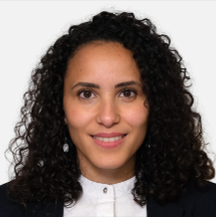
Latifa Tabia,Operational Tax and Structuring Expert, Luxembourg
Latifa advises international clients on complex tax matters, with strong expertise in FATCA, CRS, DAC6, QI, FASTER, and Pillar 2. She is the former Head of Operational Tax & Advisory at Forvis Mazars, and previously worked at Société Générale and Natixis Wealth Management, where she led operational tax teams and managed Operational tax guidance for entities in Luxembourg, Switzerland, and Monaco. Latifa holds degrees in Wealth Legal and Tax Engineering from Université Panthéon-Assas and Université Panthéon-Sorbonne, and the Luxembourg tax qualification (Cycle A and Cycle B).
Understanding client structures for AML compliance: legitimate structures, necessary complexity and risk indicators
Registration conditions620 CHF + VAT (8.1%)
Additional participants from the same company: -50%
Register Online
Contact – Register by phone
ACADEMY & FINANCE SA
Rue Neuve-du-Molard 3
1204 Genève
Switzerland
T + 41 (0)22 849 01 11
E info@academyfinance.ch